uPVC Tilt and Turn Windows Melbourne
Lumeta supplies and installs high-performance European-style tilt and turn windows designed to improve energy efficiency, indoor comfort, security, and ventilation. Combining modern functionality with sleek aesthetics, these windows are ideal for new homes, renovations, apartments, and commercial properties throughout Melbourne.
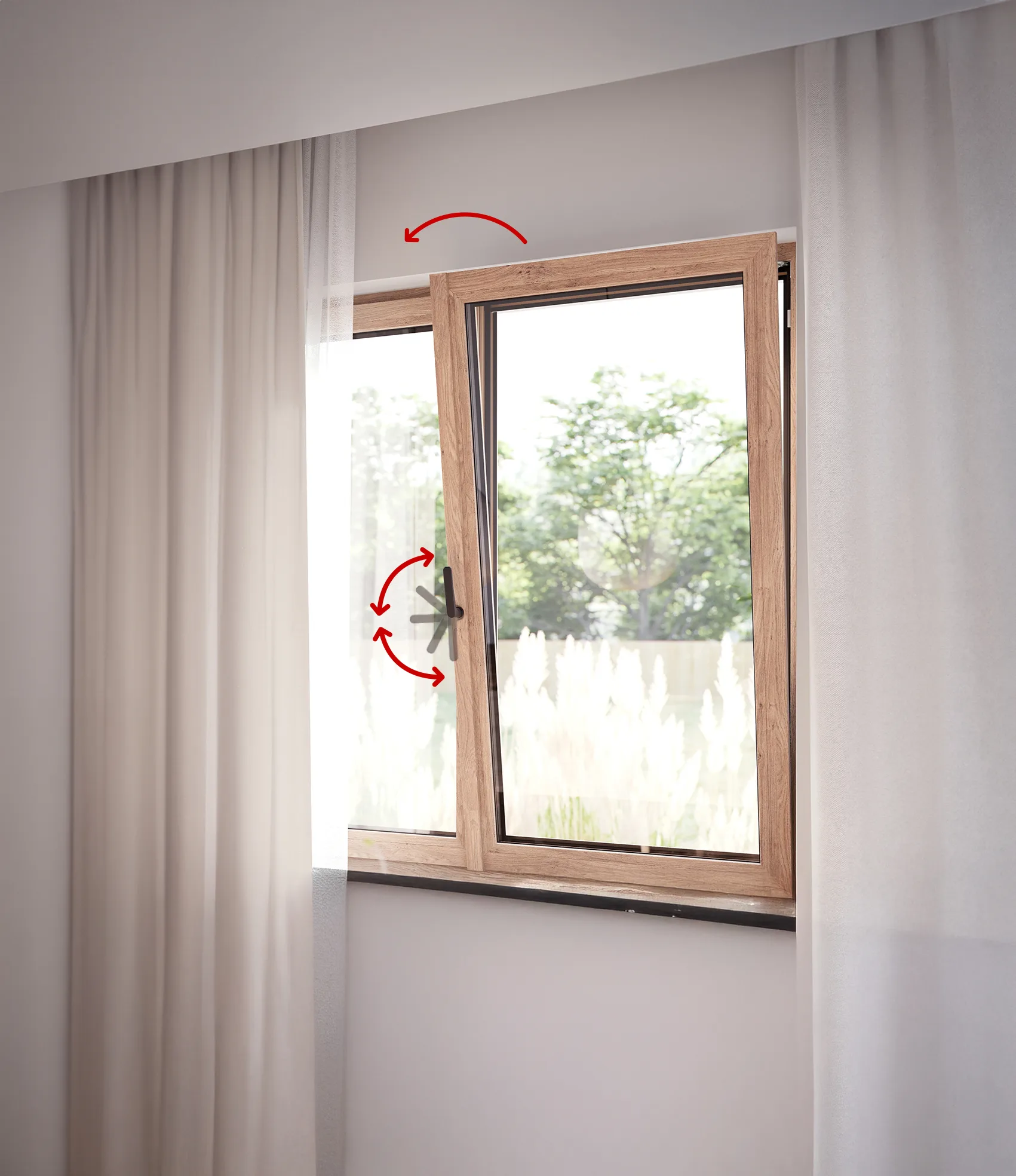
Unlike traditional window styles, tilt and turn windows offer two opening positions in a single frame. They tilt inward from the top for safe everyday ventilation or swing fully inward for maximum airflow and easy cleaning
Tilt Mode Secure Ventilation
When the handle is turned to the first position, the top of the window tilts inward while the bottom remains securely locked in place. This allows fresh air to circulate throughout your home without fully opening the window.
Because the window remains securely locked around the frame, you can enjoy improved airflow while maintaining a high level of security and weather protection.
Multi-Point Locking for Enhanced Security
Our double glazed uPVC tilt and turn windows are fitted with advanced multi-point locking hardware that secures the sash at multiple points around the frame. Unlike conventional windows that lock in only one or two places, this system provides a tighter seal for improved security, better insulation, and greater resistance to wind and weather.
What are tilt and turn windows?
Tilt and turn windows are dual-function uPVC windows operated by a single handle. Rotated one way, the sash tilts inward from the top for secure, ventilated airflow; rotated the other way, it swings fully open on side hinges like a door. Paired with double glazing, tilt and turn windows offer strong thermal insulation, acoustic reduction, and multi-point locking, making them well suited to Melbourne homes, apartments, and architect-designed new builds.
Who Tilt and Turn Windows Suit
- Upper-storey rooms and apartments where external glass cleaning access is limited the turn function lets you clean from inside
- Bedrooms and living areas where secure overnight ventilation matters, particularly in townhouses and higher-density Melbourne developments
- Architect-designed new builds seeking a distinct, European-inspired look alongside strong NatHERS relevant thermal performance
- Renovations replacing draughty timber double-hung or single-glazed aluminium windows in exposed or noise-affected locations, including properties near arterial roads or rail corridors around Hawthorn, Essendon, and the Frankston line
- Owners who want an emergency egress-compliant opening in upper-level rooms without a permanently large opening
Benefits of uPVC Double Glazed Tilt and Turn Windows
Downsides and Buyer Concerns
A trustworthy comparison includes the trade-offs, not just the benefits.
Cost
tilt and turn hardware is more complex than standard casement or awning hardware, so unit cost is typically higher
Insect screens
tilt and turn sashes need a screen system designed for both opening modes not every screen product is compatible, and this needs to be specified up front rather than retrofitted
Internal clearance
turn mode requires the sash to swing into the room, so curtains, blinds, furniture, and window dressings near the opening need to be planned around this
Installer familiarity
tilt and turn hardware is less common in Australia than casement or sliding systems, so installation and long-term adjustment quality varies more between providers than with more familiar window types
Why Choose Lumeta
Local Melbourne expertise
Local Melbourne expertise across new build and retrofit projects, including tighter-tolerance older homes
Tailored, on-site consultation
Tailored, on-site consultation rather than a generic online quote sizes, glazing spec, and hardware are assessed against your specific opening
Installation quality
Installation quality control focused on the sealing and hardware-adjustment factors that determine how tilt and turn windows perform over time
Guidance on glazing
Guidance on glazing specification relevant to Victorian requirements, including NatHERS and BASIX considerations for new builds and major renovations
Factor-based
Factor-based, transparent quoting no fixed online price lists that ignore your site conditions
Lumeta is a Melbourne-based supplier and installer of uPVC double glazed windows and doors, working with homeowners, architects, builders, and developers across new builds and replacements.
Our Process
Consultation
Measurement
Quote
Installation
Final inspection
Tilt and Turn vs Casement vs Sliding vs Awning Windows
Tilt and Turn vs Casement vs Sliding vs Awning Windows
| Feature | Tilt and Turn | Casement | Sliding | Awning |
|---|---|---|---|---|
| Opening mechanism | Tilts inward or turns fully open (dual mode) | Hinged at side, opens outward | Sashes slide horizontally | Hinged at top, opens outward |
| Ventilation control | Fine control via secure tilt position | Full or open only | Partial, limited by track | Good, rain-resistant angle |
| Locking points | Multiple, full perimeter | Single or multi-point | Single point typically | Single or multi-point |
| Interior cleaning of exterior glass | Yes, via turn mode | Limited, depends on reach | Limited | Limited |
| Best suited to | Upper floors, apartments, bedrooms | Most residential openings | Wide openings, living areas | Bathrooms, ventilation in rain |
Common Mistakes Buyers Make
- Choosing tilt and turn purely for the look, without checking internal swing clearance against blinds, curtains, or furniture placement
- Assuming all double glazed units perform the same glass spec (Low-E coating, argon fill, spacer bar) changes real-world thermal and acoustic performance more than the fact of being “double glazed” alone
- Overlooking insect screen compatibility during selection, which leads to a compromised or costly retrofit later
- Underestimating installation quality even well-made tilt and turn hardware will underperform if frame sealing, packing, and hinge adjustment aren’t done correctly
- Not confirming whether the retrofit tolerance of an existing opening suits tilt and turn hardware, particularly in older brick-veneer homes with non-standard reveals
Pricing
Tilt and turn window pricing varies by project, and Lumeta does not publish fixed prices online because the factors below change the cost significantly from one job to the next.
- Window size and number of tilt and turn units required
- Glazing specification standard double glazing versus Low-E coated or argon-filled units
- Hardware and locking configuration, including handle and hinge finish
- Frame colour and finish
- Installation complexity new build versus retrofit, site access, and any reveal or structural work required
A site consultation and measurement is the only reliable way to get an accurate figure for your project request a free quote and we’ll walk you through the cost drivers specific to your openings.
Certifications


Frequently asked questions
What are tilt and turn windows?+
Tilt and turn windows are dual-function uPVC windows controlled by a single handle. They tilt inward from the top for secure ventilation, or turn fully open on side hinges for cleaning and maximum airflow.
How much do tilt and turn windows cost in Melbourne?+
Cost depends on window size, glazing specification, hardware configuration, frame finish, and whether the project is a new build or retrofit. Because tilt and turn hardware is more complex than standard casement or awning hardware, unit costs are typically higher. Lumeta provides factor-based quotes after an on-site measurement rather than fixed online pricing.
Are tilt and turn windows secure?+
Tilt and turn windows use multi-point locking that engages around the full frame perimeter when closed, and the tilt position itself cannot be forced open from outside. This generally makes them more secure than single-point-locked window styles, provided the hardware is correctly installed and adjusted.
Can tilt and turn windows be retrofitted into existing Melbourne homes?+
Yes, in most cases, though the existing opening needs to be checked for reveal depth and internal clearance so the turn-mode swing doesn’t clash with blinds, curtains, or furniture. Older brick-veneer homes with non-standard reveals should be assessed on-site before confirming a retrofit.
Do tilt and turn windows work with insect screens?+
Yes, but the screen system needs to be designed for tilt and turn hardware specifically, since standard screens don’t always suit both opening modes. This should be specified at the quoting stage rather than added afterward.
How long do uPVC tilt and turn windows last?+
Quality uPVC frames with correctly installed and maintained hardware typically perform well for decades, similar to other uPVC window systems. Lifespan depends on hardware quality, seal condition, and how well the frame was sealed and packed during installation.
What maintenance do tilt and turn windows need?+
uPVC frames need only occasional cleaning and don’t require repainting. The moving hardware hinges and locking points benefits from periodic lubrication and adjustment to keep both the tilt and turn functions operating smoothly.
Specify high-performance windows and doors for your Melbourne new build
Contact us today to arrange a free consultation. We'll review your project and provide a detailed written quote.